Transformer Neutral Grounding Resistor In China
Writer: admin Time:2025-12-08 17:45:53 Browse:298℃
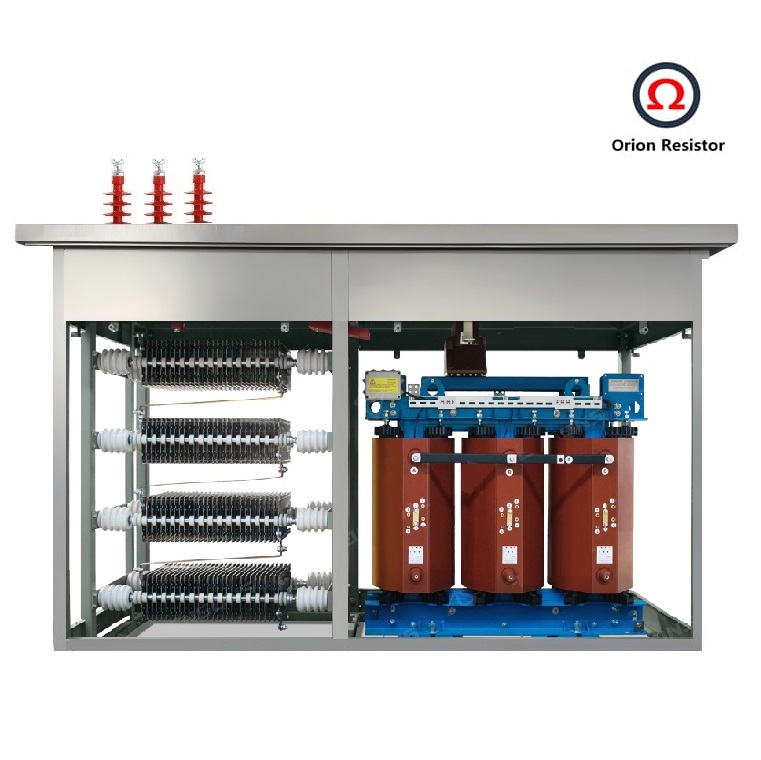
A Transformer Neutral Grounding Resistor (NGR) is an essential component in electrical power systems, designed to control fault currents and protect equipment. By connecting the neutral point of a transformer to the ground through a resistor, the NGR limits the magnitude of the ground fault current while maintaining system stability. This helps prevent damage to transformers, switchgear, and other connected equipment during electrical faults. The use of NGRs is common in medium- and high-voltage systems where controlling transient overcurrents is crucial for safety and operational reliability.
Working Principle
The neutral grounding resistor works by providing a controlled path for current when a ground fault occurs. In a three-phase transformer, if one phase comes in contact with the ground, the NGR allows a small current to flow through the neutral to the earth, preventing the full line-to-ground voltage from reaching equipment. This reduces the risk of insulation breakdown, fire hazards, and mechanical stress on the transformer. The resistor value is carefully selected to ensure adequate current limiting while allowing protective relays to detect faults and isolate affected sections of the system.
Construction and Design
Neutral grounding resistors are typically constructed using high-resistance wire or metal alloys capable of withstanding high temperatures. They are mounted on insulating supports and enclosed in protective housings to ensure safety and reliability. Some designs incorporate water or oil cooling systems for continuous operation under heavy fault conditions. The mechanical strength and thermal capacity of the resistor are critical, as they must endure repeated fault events without deterioration. Modern NGRs also include monitoring devices that track temperature and current flow, allowing operators to assess performance and detect potential failures.
Applications in Electrical Systems
Transformer neutral grounding resistors are widely used in industrial plants, power generation stations, and distribution networks. In industrial settings, they protect motors, generators, and transformers from damage due to ground faults. In power distribution systems, NGRs help maintain system stability by limiting fault currents, reducing the risk of voltage dips, and ensuring continuous operation of unaffected sections. They also aid in minimizing arc flash hazards and contribute to personnel safety by controlling transient overvoltages.
Advantages of Using NGR
Using a transformer neutral grounding resistor provides significant benefits to electrical systems. It reduces equipment stress during faults, allowing for longer service life and lower maintenance costs. By limiting ground fault currents, NGRs prevent extensive system outages and facilitate faster fault detection. This controlled grounding also helps maintain voltage stability and protects sensitive equipment from sudden voltage surges. The combination of safety, reliability, and improved operational efficiency makes NGRs a vital component in modern power systems.
Conclusion
Transformer neutral grounding resistors play a crucial role in electrical networks by limiting ground fault currents and protecting valuable equipment. Their proper design, installation, and maintenance ensure system safety, reliability, and stability. As power systems become more complex and sensitive, the importance of NGRs continues to grow, providing engineers with an effective solution for managing fault conditions and maintaining operational efficiency across industrial and utility applications.
Related Articles:
How to Accurately Calculate the Neutral Grounding Resistance Value of a Transformer
Global Top 8 Neutral Grounding Resistor (NGR)Manufacturers
Transformer Neutral Grounding Methods and Applications for High-, Medium-, and Low-Voltage Systems
Solid, Resistance, and Ungrounded Systems — Which Is Safer for your Network?
Why Does the Neutral Point of a Large Generator Need to be Reliably Grounded?
CATEGORIES
- Neutral Grounding Resistor for Transformer
- Generator Neutral Grounding Resistor
- Low Voltage Neutral Grounding Resistor
- Neutral Grounding Arc Suppression Coils (Peterson Coil)
- Neutral Point Gap Grounding Protection Device
- Nitrogen Injection Fire Protection System for Transformer (NIFPS)
- Transformer Air-Cooled Control Equipment
- Nonlinear Neutral Grounding Equipment
LATEST NEWS
- Why Does the Neutral Point of a Large Generator Need to be Reliably Grounded?
- Transformer Neutral Grounding Methods and Applications for High-, Medium-, and Low-Voltage Systems
- How to Accurately Calculate the Neutral Grounding Resistance Value of a Transformer
- Global Top 8 Neutral Grounding Resistor (NGR)Manufacturers
- How to Accurately Select the Insulation Level of a Neutral Grounding Resistor?
CONTACT US
WhatsApp:
Tel: +86-312-5959618
Email: info@orionresistors.com
Add: No. 79, Fuchang Road, Zhongguancun Entrepreneurship Base, Baoding City,China