Transformer Neutral Grounding Resistor Supplier in China
Writer: admin Time:2025-11-06 16:37:20 Browse:1251℃
A Transformer Neutral Grounding Resistor is an electrical component used to control the fault current in power systems. It is connected between the neutral point of a transformer and the ground to limit the magnitude of ground fault currents. NGRs play a critical role in maintaining system stability, protecting equipment, and ensuring safety in industrial, commercial, and utility applications.
Overview of Transformer Neutral Grounding Resistors
Transformer neutral grounding resistors are designed to connect the neutral point of a transformer to the earth through a resistor. This connection helps in controlling the current that flows during ground faults, preventing excessive damage to transformers, switchgear, and other equipment. The resistor value is selected based on system voltage, fault current, and operational requirements. NGRs can be used in low, medium, and high-voltage systems to provide controlled grounding and improve system reliability.
Types of Transformer Neutral Grounding Resistors
There are various types of transformer neutral grounding resistors based on construction, application, and operational requirements. Resistors can be stationary, mounted indoors or outdoors, or designed as portable units. They may consist of wire-wound resistive elements, metal oxide films, or ceramic materials capable of handling high temperatures and fault currents. Some NGRs are air-cooled, while others utilize water or oil for cooling in high-power applications. Each type is engineered to meet the specific needs of the electrical system.
Working Principle
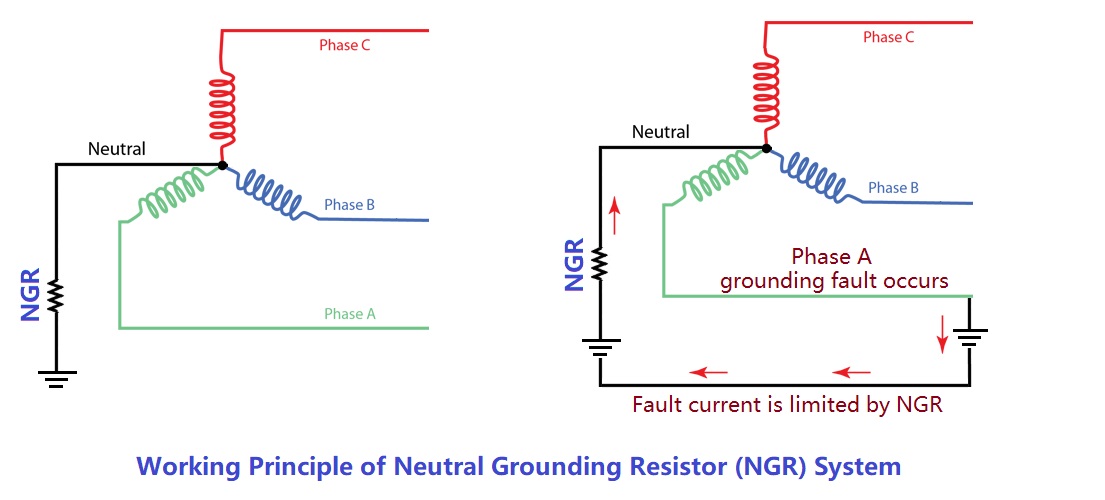
The working principle of a transformer neutral grounding resistor is straightforward. During normal operation, the NGR allows minimal current to flow through the neutral point to the ground. In the event of a ground fault, the resistor limits the fault current to a predetermined value. This controlled current prevents damage to the transformer and other connected equipment, reduces electrical stress, and improves overall system stability. NGRs are carefully rated to handle expected fault currents without overheating or failing.
Applications in Power Systems
Transformer neutral grounding resistors are used in a wide range of applications. They are commonly found in power generation plants, substations, industrial facilities, and commercial buildings. NGRs protect transformers, generators, and motors from damage due to ground faults. They are particularly important in systems with high voltage or ungrounded networks, where uncontrolled fault currents can lead to severe equipment damage, operational downtime, and safety hazards. NGRs are also used in distribution systems to enhance coordination with protective relays and circuit breakers.

Advantages of Using Neutral Grounding Resistors
Using a transformer neutral grounding resistor provides several operational advantages. NGRs limit fault currents, reducing mechanical and thermal stress on electrical components. They improve system stability and facilitate the quick detection and isolation of faults. By controlling the ground fault current, NGRs reduce the risk of electrical fires, equipment failure, and prolonged downtime. They also allow for selective tripping of protection devices, minimizing disruption to the overall power system.
Installation and Maintenance Considerations
Proper installation of transformer neutral grounding resistors is essential for safe and effective operation. NGRs should be installed in ventilated areas to prevent overheating and ensure proper cooling. Connections must be secure and compliant with system voltage and current ratings. Regular inspection and maintenance, including checking for loose connections, corrosion, and overheating, help ensure long-term performance and reliability. Manufacturers provide detailed guidelines for installation, operation, and maintenance to optimize the performance of NGRs.
Conclusion
Transformer neutral grounding resistors are crucial components in modern electrical power systems. By controlling ground fault currents, they protect transformers, improve system stability, and enhance safety for equipment and personnel. With proper selection, installation, and maintenance, NGRs contribute to reliable and efficient power system operation across industrial, commercial, and utility applications.
How to Accurately Calculate the Neutral Grounding Resistance Value of a Transformer
Global Top 8 Neutral Grounding Resistor (NGR)Manufacturers
Transformer Neutral Grounding Methods and Applications for High-, Medium-, and Low-Voltage Systems
Solid, Resistance, and Ungrounded Systems — Which Is Safer for your Network?
Why Does the Neutral Point of a Large Generator Need to be Reliably Grounded?

Orion Resistor, with over 32 years of experience originating from China’s military industry, is a leading manufacturer of grounding and protection equipment. Renowned for reliability and stable performance, we provide safe grounding solutions to over 6,000 customers worldwide.
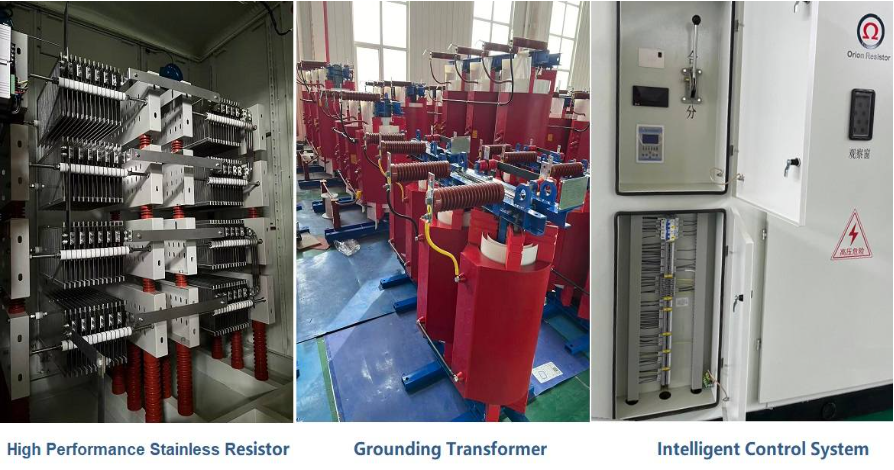
Our products include Neutral Grounding Resistor (NGR) cabinets, transformer neutral grounding systems, and low-voltage resistor cabinets. Since most transmission line faults are single-phase-to-ground, NGRs play a vital role in system protection by grounding the neutral point through resistance.
Designed for voltages from 240V to 132kV and currents from 2A to 10,000A, our resistors meet IEEE Std 32-1972 and cover both short-time fault and continuous load applications. Enclosures are available for indoor and outdoor use with IP00–IP56 protection levels.
Widely used in power plants, substations, utilities, and heavy industries, Orion Resistor combines advanced R&D with custom engineering to meet diverse project needs—enhancing safety, reliability, and compliance.
Orion Resistor – Your trusted partner for grounding and protection solutions.


CATEGORIES
- Neutral Grounding Resistor for Transformer
- Generator Neutral Grounding Resistor
- Low Voltage Neutral Grounding Resistor
- Neutral Grounding Arc Suppression Coils (Peterson Coil)
- Neutral Point Gap Grounding Protection Device
- Nitrogen Injection Fire Protection System for Transformer (NIFPS)
- Transformer Air-Cooled Control Equipment
- Nonlinear Neutral Grounding Equipment
LATEST NEWS
- Why Does the Neutral Point of a Large Generator Need to be Reliably Grounded?
- Transformer Neutral Grounding Methods and Applications for High-, Medium-, and Low-Voltage Systems
- How to Accurately Calculate the Neutral Grounding Resistance Value of a Transformer
- Global Top 8 Neutral Grounding Resistor (NGR)Manufacturers
- Neutral Grounding Resistor (NGR) Sizing – Step-by-Step Practical Guide
CONTACT US
WhatsApp: +86-18631228466
Tel: +86-312-5959618
Email: info@orionresistors.com
Add: No. 79, Fuchang Road, Zhongguancun Entrepreneurship Base, Baoding City,China