Neutral Grounding Resistor (NGR): The Core Safeguard for High-Resilience MV/HV Power Grids
Writer: admin Time:2026-06-01 10:08:58 Browse:151℃
The common characteristic between Neutral Grounding Resistor (NGR) systems and Isolated Neutral Systems (Ungrounded Systems) is that upon a Single Line-to-Ground (SLG) fault, both systems experience a Neutral Voltage Displacement (UNE), leading to a voltage rise in the healthy phases. However, compared to isolated grids, the core technical advantage of NGR systems lies in the energy dissipation and electrical damping effects of the resistor—a feature that serves as the critical pillar for fault protection in Medium and High Voltage (MV/HV) grids.
Beyond limiting the SLG fault current, the resistive properties of an NGR play a decisive role in suppressing transient processes. During the transient phase of fault arc extinction, the NGR utilizes its energy absorption and charge dissipation characteristics to effectively suppress intermittent arcing overvoltages. This neutralizes the destructive "restrike" effect of fault transients, fundamentally preventing insulation failure across multiple nodes due to overvoltage and ensuring the overall stability of the grid's insulation system.
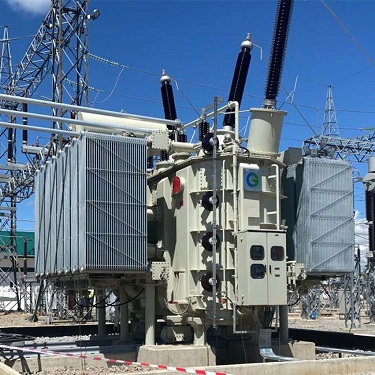
Isolated neutral systems are prone to destructive re-ignition overvoltages during the arc extinction phase due to the lack of an effective energy dissipation path. In contrast, the NGR acts as a stabilizing element for grid transients. By dissipating transient energy and providing system damping, it suppresses overvoltage spikes and prevents irreversible damage to dielectric media caused by transient stresses.
Grounding design is a central component of MV/HV grid engineering, directly impacting personnel safety, equipment integrity, and the grid's operational stability and fault-handling capability. Selecting an appropriately rated NGR is a vital decision-making element in the grounding design of any MV/HV network.
The resistance value (RN) is the core technical parameter that dictates the configuration logic and operational mode of the grounding protection scheme. The alignment between resistance selection and protection strategy is as follows:
Low Resistance Grounding (LRG): Through an engineered resistance value, the NGR ensures a sufficient ground fault current to provide a reliable trigger for protective relaying. This enables selective tripping to rapidly isolate the fault, preventing permanent equipment damage from prolonged exposure to fault stress.
High Resistance Grounding (HRG): By utilizing a high resistance value to limit the ground fault current to levels below the relay trip threshold, the system can achieve an "Alarm Only" operational mode. This ensures uninterrupted power supply for a specific duration, significantly enhancing service continuity.
The technical rationale for preferring NGR systems over isolated grids is based on three dimensions:
1.Precision Overvoltage Control: Leveraging the damping and energy dissipation properties of the resistor, NGRs suppress arcing ground overvoltages at the source, eliminating the risks of overvoltage superposition and amplification inherent in ungrounded systems.
2.Flexible Protection Configuration: By adjusting the resistance value (RN), operators can flexibly switch between "Fast Fault Clearing" and "Fault Alarm/Continuous Operation" modes to meet the reliability requirements of different power supply scenarios.
3.Extended Equipment Lifecycle: NGRs effectively mitigate the electrical stresses of fault transients, significantly reducing the mechanical stresses on the windings of transformers and reactors caused by fault overcurrents and overvoltages. This slows insulation aging and structural degradation, extending the total lifecycle of core assets.
As the core "electrical buffer" of MV/HV grids, the NGR achieves precise control of SLG fault currents and effective suppression of transient processes through the dual mechanisms of current limitation and energy dissipation.
The resilience of MV/HV grids centers on the precise management of fault transients and the flexible adaptation of fault responses. A deep understanding of NGR resistive characteristics, value selection, and their alignment with grid operational requirements is the key to upgrading conventional power grids into high-resilience systems.
Core Technical Criterion for NGR Application: To ensure that the advantages of transient suppression and energy dissipation are fully realized, the engineering design must ensure that the resistive ground fault current (IRN) provided by the NGR is greater than or equal to the system’s total capacitive charging current (IC) to effectively disrupt the conditions required for arc re-ignition.
CATEGORIES
- Neutral Grounding Resistor for Transformer
- Generator Neutral Grounding Resistor
- Low Voltage Neutral Grounding Resistor
- Neutral Grounding Arc Suppression Coils (Peterson Coil)
- Neutral Point Gap Grounding Protection Device
- Nitrogen Injection Fire Protection System for Transformer (NIFPS)
- Transformer Air-Cooled Control Equipment
- Nonlinear Neutral Grounding Equipment
LATEST NEWS
- Why Does the Neutral Point of a Large Generator Need to be Reliably Grounded?
- Transformer Neutral Grounding Methods and Applications for High-, Medium-, and Low-Voltage Systems
- How to Accurately Calculate the Neutral Grounding Resistance Value of a Transformer
- Global Top 8 Neutral Grounding Resistor (NGR)Manufacturers
- How to Accurately Select the Insulation Level of a Neutral Grounding Resistor?
CONTACT US
WhatsApp:
Tel: +86-312-5959618
Email: info@orionresistors.com
Add: No. 79, Fuchang Road, Zhongguancun Entrepreneurship Base, Baoding City,China