Are Expensive Neutral Grounding Resistor (NGR) Necessary?
Writer: admin Time:2025-10-13 11:17:30 Browse:456℃
Grounding resistors and arc suppression & harmonic elimination systems are common components in neutral grounding schemes, playing a vital role in maintaining the safety and stability of power networks. However, these systems are often expensive, which can pose a significant financial burden for enterprises or utilities with limited budgets. This raises a critical question: are such systems truly necessary for every power user?
1. Core Principle: Clarifying "Why They Exist" — Not "Useless", but "Effective for Specific Faults"
Both devices target the single-phase grounding fault, the most common fault in power systems (especially 10kV/35kV medium-voltage systems), accounting for over 70% of distribution system faults. However, their operating mechanisms and application scenarios are completely different, as detailed in the table below:
Type | Core Principle | Core Functions |
Neutral Grounding Resistor | Connects a resistor in series/parallel with the system neutral point to limit the single-phase grounding fault current (reducing the fault current from several thousand amperes to tens to hundreds of amperes). | 1. Prevent transformers and cables from being burned due to excessive fault current;2. Provide a "detectable current signal" for relay protection to quickly isolate faults;3. Avoid fault expansion to phase-to-phase short circuits. |
Integrates arc suppression devices (e.g., zinc oxide varistors, arc suppression coils) and resonance damping components to extinguish arcs caused by "arc grounding". | 1. Resolve arc grounding overvoltage (up to 3-5 times the rated voltage) in "ungrounded neutral / neutral grounded via arc suppression coil" systems;2. Prevent cable and insulator breakdown, equipment burnout, or insulation aging caused by overvoltage;3. Reduce fire and explosion risks induced by arcs. |
In short: The Grounding Resistor controls "current magnitude", while the Arc Suppression & Resonance Damping system addresses "arcs and overvoltage". They complement each other for different fault scenarios rather than being mutually exclusive.
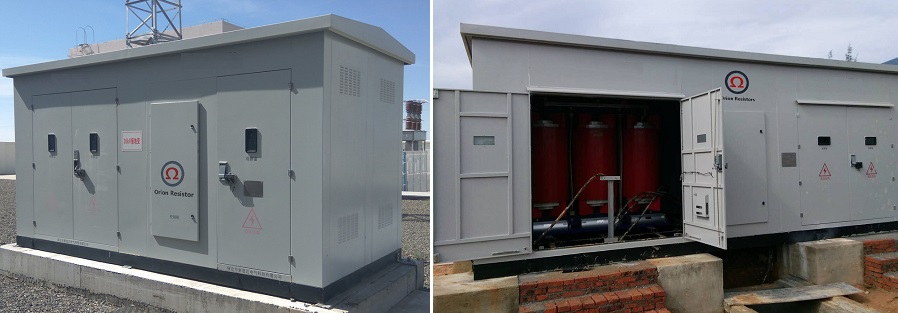
2. Application Scenarios: Boundaries Between Mandatory and Optional Installation
The core criterion for determining installation is "whether the system faces corresponding fault risks". Below is a breakdown of "mandatory installation scenarios" and "optional installation scenarios":
2.1 Mandatory Installation Scenarios: Fault Loss Far Exceeds Cost Without Installation
2.1.1 Mandatory Scenarios for Grounding Resistor s
Medium-voltage systems (10kV/35kV) with neutral grounded via resistorsThe design purpose of such systems is to "limit fault current via resistors". Without a grounding resistor , the fault current will far exceed the equipment tolerance (e.g., the allowable short-circuit current of cables is usually ≤20kA, but may exceed 50kA without resistors), directly burning transformers, switchgear, or even causing fires.
Typical Industries: Industrial plants (chemical, metallurgical, automotive manufacturing), large commercial complexes (e.g., shopping malls, data centers) — Power outage for 1 hour in these scenarios can result in losses of hundreds of thousands of dollar (e.g., chemical plant shutdowns, data center outages), and the cost (usually 10,000-30,000 dollar for 10kV s) is far lower than fault losses.
Scenarios requiring "rapid fault isolation"Examples include underground power supply systems in coal mines: If a single-phase grounding fault occurs in underground cables, failure to limit the current and trip quickly via a grounding resistor may trigger gas explosions. Another example is the subway traction power supply system — delayed fault handling will cause train outages, leading to significant social impacts.
2.1.2 Mandatory Scenarios for Arc Suppression & Resonance Dampings
Medium-voltage systems with ungrounded neutral / neutral grounded via arc suppression coils, and long cable lines with large capacitive currentFor medium-voltage systems (especially 10kV), if the total length of cables exceeds 10km, "sustained arcs" will occur during single-phase grounding (arcs cannot self-extinguish when capacitive current >10A), leading to arc grounding overvoltage. This overvoltage can break down switchgear insulation, burn voltage transformers (PT), and even cause cable head explosions.
Typical Industries: Urban distribution networks (cable-dominated), oilfields/mining areas (long-distance cable power supply), wind/solar booster stations (cables connecting wind turbines/solar panels with scattered and long lines).
Scenarios with mandatory "explosion-proof and fire-prevention" requirementsExamples include gas stations, liquefied gas stations, and hazardous chemical warehouses: Electric sparks from arc grounding may directly ignite flammable and explosive gases. The arc suppression & resonance damping can extinguish arcs within 0.1 seconds, eliminating safety accidents at the source.
2.2 Optional Installation Scenarios: Low Risk, Low Loss, Can Be Postponed or Replaced
Low-voltage systems (380V/220V): The current during single-phase grounding in low-voltage systems is small (usually tripped via residual current protectors). The "fault current limiting / arc suppression" functions for medium-voltage systems are unnecessary, and installing grounding resistor s or arc suppression & resonance damping s is considered "over-protection".
Small-capacity, short-line civil distribution systems: Such as ordinary residential communities (short 10kV lines, capacitive current <5A) and small office buildings — Arcs can self-extinguish during single-phase grounding, and power outage losses are small (residential power supply can be switched via backup lines). "Regular insulation testing" can replace installation.
Neutral directly grounded systems: For such systems (e.g., high-voltage systems of 110kV and above), the fault current is extremely large, and circuit breakers are relied on for direct tripping. Grounding resistor s have limited effect (only required in specific "low-resistance grounding" designs).
3. Core Consideration Factors: 4-Step Judgment for "Whether Installation Is Worthwhile"
Beyond application scenarios, quantitative trade-offs must be made from 4 dimensions — "risk, cost, specifications, and maintenance" — to avoid "blind installation" or "refusal to install".
3.1 Step 1: Evaluate "Fault Loss" — More Important Than Cost
cost (10,000-50,000 dollar for 10kV s) is a "one-time investment", while fault loss is a "devastating expense". Two types of losses need to be calculated:
Direct Losses: Burned transformers (approximately 20,000 dollar for 10kV/1000kVA), cables (approximately 10,000 dollar per kilometer), and switchgear (approximately 5000 dollar per unit);
Indirect Losses: Industrial shutdown losses (e.g., 20,000-50,000 dollar per hour of shutdown for chemical enterprises), business reputation losses (e.g., customer loss due to data center outages), and safety accident fines (e.g., fines of millions of dollar for coal mine accidents).
Conclusion: If fault loss ≥ 3 times the cost, installation is a "cost-effective risk mitigation measure".
3.2 Step 2: Align with "Industry Specifications" — Not "Optional Installation", but "Mandatory Installation"
Some countries have mandatory industry standards; non-compliance constitutes a violation of regulations:
For example, certain countries stipulate that: Underground 10kV systems must adopt "neutral grounded via resistors" and be equipped with grounding resistor s (e.g., EU ATEX 114 Directive, US OSHA Explosion Protection Standards);
For petrochemical enterprises: Medium-voltage systems in explosive hazard areas must be equipped with arc suppression & resonance damping s to prevent arcs from igniting flammable media. For instance, the EU ATEX 114 Directive, US OSHA, and NFPA 70 Explosion Protection Standards stipulate that equipment in petrochemical explosive hazard areas must additionally meet requirements such as "pressure peak ≤80kPa" and "insulation material CTI ≥600";
Certain urban distribution network planning and design standards: Distribution networks with total 10kV cable length >15km must be equipped with arc suppression devices to suppress arc grounding overvoltage.
3.3 Step 3: Analyze "System Parameters" — Avoid "Incorrect Installation"
If the system has a neutral grounded via resistors: A grounding resistor is mandatory (otherwise, the resistor is missing, leading to uncontrolled fault current);
If the system has an ungrounded neutral / neutral grounded via arc suppression coil: And the cable capacitive current >10A, an arc suppression & resonance damping is mandatory (otherwise, arc grounding overvoltage will break down equipment);
If the system is a low-voltage 380V/220V system: Installation is unnecessary (residual current protectors can resolve single-phase grounding issues).
3.4 Step 4: Calculate "Maintenance Cost" — Avoid "Installed but Unusable"
s "may never be used", but they must be "usable in case of faults". Maintenance costs cannot be ignored:
Grounding Resistor : Annual resistance value testing (to prevent resistor burnout and failure) is required, with an annual maintenance cost of approximately 1000-2000 dollar;
Arc Suppression & Resonance Damping : Semi-annual insulation performance testing of arc suppression components (to prevent aging of zinc oxide varistors) is required, with an annual maintenance cost of approximately 500-1000 dollar.
Conclusion: Maintenance costs are far lower than fault losses and are considered "necessary investments".
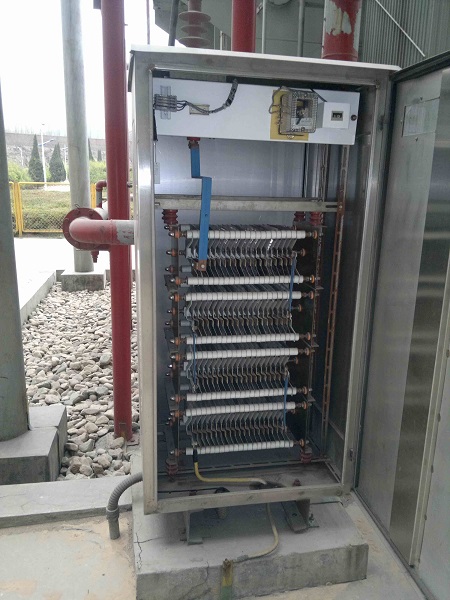
4. Comprehensive Recommendations: Scenario-Based Decisions
Scenario Type | Installation Required | Recommended s | Core Reason |
Coal mines, chemical plants, oilfields (explosion-proof + high shutdown lo) | Mandatory | Grounding Resistor + Arc Suppression & Resonance Damping (matched to grounding method as needed) | Faults may cause explosions/major shutdown losses; s are the safety bottom line. |
Large shopping malls, data centers (high power supply reliability requirements) | Mandatory | Grounding Resistor (for systems with neutral grounded via resistors)) | Power outages affect people’s livelihoods/business reputation; rapid fault isolation is required. |
Urban 10kV distribution networks (total cable length >15km) | Mandatory | Arc Suppression & Resonance Damping | Large cable capacitive current; arc grounding overvoltage easily burns distribution equipment and affects power supply for a large number of residents. |
Ordinary residential communities (low-voltage 380V + short cables) | Not Required | - | Low fault loss; residual current protectors can resolve issues; installation is over-protection. |
Small factories (low-voltage 380V / small-capacity 10kV) | Optional (if shutdown loss is low) | - | Can be replaced by "regular insulation testing"; if shutdown loss >10,000 dollar per incident, installation of an arc suppression & resonance damping is recommended. |
5. Conclusion
Grounding resistor cabinets and arc suppression & resonance damping cabinets are not "luxuries", but "necessities for risk-sensitive scenarios". The core logic for determining installation is: Whether "fault loss × fault probability" is greater than "cabinet cost + maintenance cost".
If the industry has mandatory specifications and fault losses are high (e.g., industrial, explosion-proof scenarios), cabinets must be installed even if they "may never be used" — just like fire extinguishers, which are useless in normal times but life-saving in case of fire. If fault losses are low (e.g., ordinary civil low-voltage scenarios), installation can be postponed or replaced by other measures.


CATEGORIES
- Neutral Grounding Resistor for Transformer
- Generator Neutral Grounding Resistor
- Low Voltage Neutral Grounding Resistor
- Neutral Grounding Arc Suppression Coils (Peterson Coil)
- Neutral Point Gap Grounding Protection Device
- Nitrogen Injection Fire Protection System for Transformer (NIFPS)
- Transformer Air-Cooled Control Equipment
- Nonlinear Neutral Grounding Equipment
LATEST NEWS
- Why Does the Neutral Point of a Large Generator Need to be Reliably Grounded?
- Transformer Neutral Grounding Methods and Applications for High-, Medium-, and Low-Voltage Systems
- How to Accurately Calculate the Neutral Grounding Resistance Value of a Transformer
- Global Top 8 Neutral Grounding Resistor (NGR)Manufacturers
- How to Accurately Select the Insulation Level of a Neutral Grounding Resistor?
CONTACT US
WhatsApp:
Tel: +86-312-5959618
Email: info@orionresistors.com
Add: No. 79, Fuchang Road, Zhongguancun Entrepreneurship Base, Baoding City,China