6 Global Power Disasters Rooted in Neutral Point Failures
Writer: admin Time:2026-01-23 08:42:05 Browse:256℃
In a power system, the neutral point of transformers and generators is often regarded as the system’s "fulcrum of balance." During normal operation, it remains silent and inconspicuous, with a voltage hovering near zero. However, once the system loses its equilibrium, this hidden node instantaneously transforms into a "powder keg" bearing immense electrical stress.
This article provides an in-depth review of six major global incidents triggered by neutral point failures, revealing the overlooked insulation hazards and design blind spots. Furthermore, it explores how we can safeguard this critical "lifeline" amidst today's transition toward next-generation power systems.
1. Transformer Failure at Australia’s Waratah Super Battery Project
(Neutral Grounding System–Related Failure)
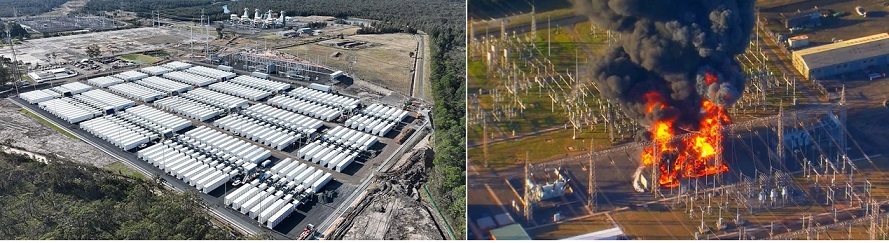
The Waratah Super Battery Project is located in Munmorah on the Central Coast of New South Wales, Australia. It is one of the world’s largest battery energy storage systems (BESS), with an installed capacity of 850 MW / 1680 MWh. The project is developed and operated by Akaysha Energy, a BlackRock-backed company, and is equipped with three 350 MVA high-voltage transformers supplied by the local manufacturer Wilson Transformer Company. The system is designed to provide grid-scale peak shaving and reserve power, with full commercial operation originally scheduled for the end of 2025.
On 18 October 2025, just hours before full commissioning, a catastrophic failure occurred in one of the 350 MVA high-voltage transformers during hold-point testing, a critical phase in which the system transitions from partial to full output capacity. The transformer was severely damaged and deemed beyond repair. For precautionary safety reasons, a second transformer was immediately de-energized for inspection, with its restart remaining uncertain.
As a result, the project has been forced to operate using only one remaining transformer, limiting output to 350 MW, approximately 41% of the designed capacity. The incident delayed the project by at least six months, causing significant economic losses and triggering major insurance claims.
Root Cause Analysis
Preliminary investigations indicate that the failure was closely associated with the transformer neutral grounding system. During the testing phase, grid voltage fluctuations caused abnormal neutral point displacement voltage. When combined with latent weaknesses in the transformer’s internal insulation, this led to overloading of the neutral grounding circuit, generating excessive electrical stress within the transformer and ultimately resulting in irreversible damage.
The neutral grounding design of the high-voltage transformer was not fully adapted to the rapid and large-scale power fluctuations characteristic of battery energy storage systems. Furthermore, monitoring of neutral voltage and current during commissioning was insufficient, preventing early detection of abnormal conditions.
Compounding the issue, global transformer supply chain constraints have resulted in replacement lead times of 24–36 months, significantly amplifying the operational and financial impact. Insurance companies have since intervened to assess losses, with estimated claims exceeding AUD 90 million, including equipment replacement costs and revenue losses due to delayed operation.
2. The 2012 Northern India Blackout
(Transformer Neutral Fault Chain Reaction)
Incident Overview
This event represents the largest blackout in India’s history, unfolding in two successive stages and triggering a cascading transformer failure across the grid.
At 02:35 AM on 30 July 2012, a short circuit occurred on the 400 kV Bina–Gwalior transmission line within the Agra–Bareilly corridor, initiating the collapse of the Northern Grid. Numerous power plants were forced offline, creating an immediate power deficit of approximately 32 GW. As a result, 14 states were plunged into darkness, affecting nearly 370 million people. Railways, airports, and essential public services were severely disrupted. Partial power restoration was achieved only by the evening.
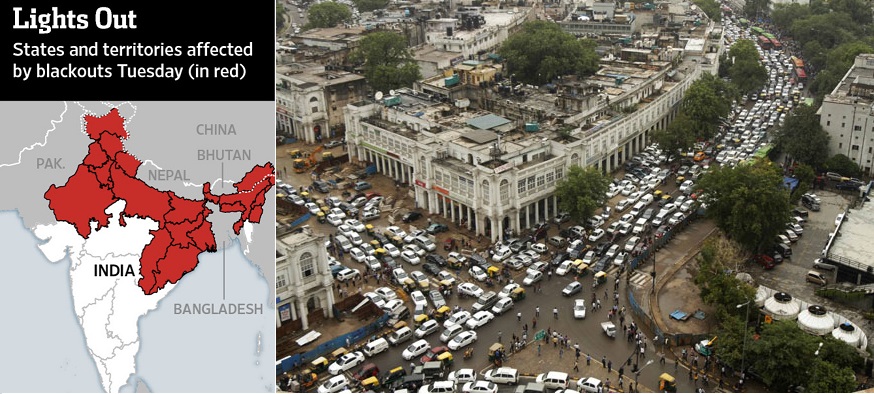
However, at 13:02 on 31 July, a relay station failure near the Taj Mahal triggered a second collapse. This time, the outage propagated rapidly from the Northern Grid to the Eastern Grid, ultimately resulting in a blackout across 22 states. The number of affected people exceeded 620 million, nearly half of India’s population and approximately 9% of the world’s population, making it the largest power outage by population impact in human history.
Root Cause Analysis
The fundamental cause was long-term grid overloading, which led to voltage instability and subsequently triggered a chain reaction of transformer neutral point failures.
Prolonged drought conditions and extreme heat drove electricity demand to record levels. Several states exceeded their allocated power draw, placing immense stress on the grid and pushing system voltage into an unstable operating region. Under these conditions, severe neutral point displacement voltages developed in multiple transformers.
A large number of transformers in the network were aging units, with degraded neutral insulation systems that had significantly reduced dielectric strength. These transformers were unable to withstand the additional electrical stress imposed by voltage displacement, resulting in neutral point flashover failures.
Each flashover further destabilized system voltage, causing additional transformers to trip on protection. This created a vicious cycle of “voltage instability → neutral flashover → equipment outage → further voltage imbalance”, ultimately leading to the collapse of both the Northern and Eastern Grids.
Delayed grid dispatch response and the failure to activate emergency reserve mechanisms in a timely manner further accelerated the propagation and escalation of the blackout.
3. Brazil’s 2011 Northeast Grid Blackout
(Generator Neutral Protection Failure)
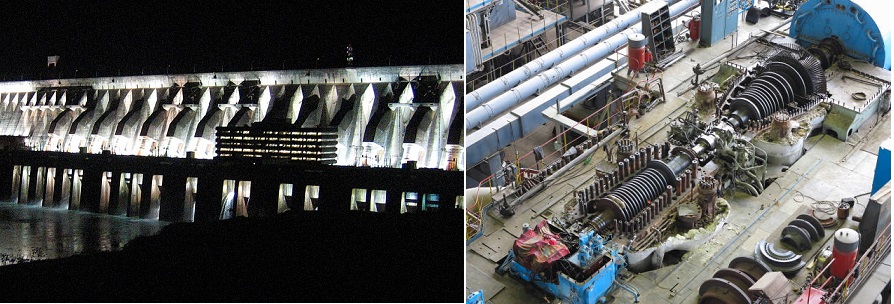
In February 2011, a malfunction occurred in a 500 kV circuit breaker between a transmission line and a busbar in Brazil’s power system. Due to protection misoperation, the busbar was tripped, electrically isolating the Northeast Grid from the Northern and Southeastern Grids and forcing it into islanded operation.
Subsequently, due to incorrect settings of generator neutral protection systems at multiple hydroelectric plants, fault currents and neutral voltage displacement could not be effectively limited. As a result, a large number of hydroelectric generating units were forced offline in rapid succession, creating a massive generation deficit.
The entire Northeast Grid lost power, affecting seven states, with a total load loss of approximately 8,900 MW. More than 10 million people were impacted, and public transportation, essential services, and residential power supply were brought to a standstill.
Root Cause Analysis
One of the key causes was improper configuration and setting of generator neutral grounding and protection systems. The neutral grounding arrangements failed to adequately control zero-sequence fault currents and neutral point displacement voltages following grid separation.
Once the system entered islanded operation, overall stability deteriorated sharply. Single-line-to-ground fault conditions were neither detected nor cleared promptly by the neutral protection systems, allowing insulation stress to accumulate and propagate, ultimately leading to widespread generator insulation damage and cascading unit trips.
Structural weaknesses in the grid topology and insufficient coordination among protection devices further contributed to the scale and speed of the blackout.
4. 13 July 2019 Manhattan West Side Blackout
(Neutral Monitoring and Protection Logic Failure)
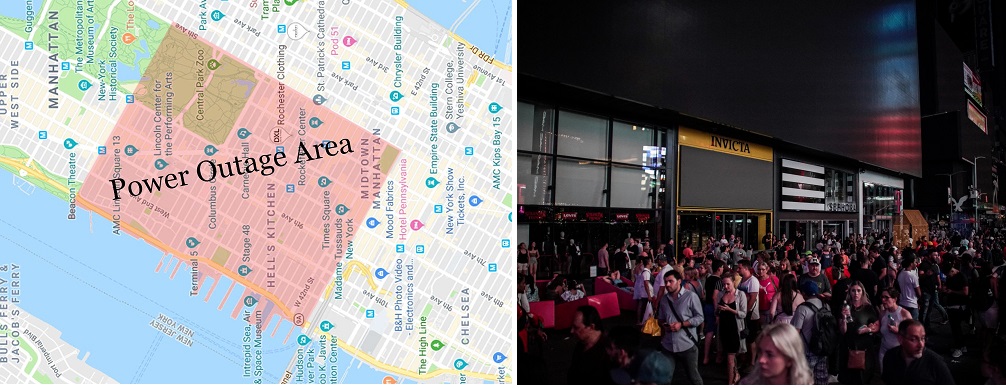
On 13 July 2019, a large-scale blackout struck the West Side of Manhattan, drawing global attention. Unlike typical outages caused by overload, this incident resulted from logical failures within the relay protection system, leading to a cascading shutdown.
The initiating event was a short-circuit fault in a 13 kV distribution cable at Con Edison’s West 65th Street substation. Under normal circumstances, the nearest protection device should have rapidly isolated the fault. However, due to a failure in the neutral grounding loop monitoring system, a proper fault current return path was not established, rendering the protection relays effectively “blind” to the fault.
Because the fault current could neither return correctly nor be detected, the fault persisted and propagated stress upstream to the West 65th Street and West 49th Street substations. Abnormal protection logic then triggered incorrect interlocking actions, disconnecting multiple distribution zones rather than isolating the faulted section alone.
The outage affected approximately 72,000 customers, plunged Times Square’s LED displays into darkness, trapped thousands of people in elevators, and caused widespread subway service disruptions. The incident exposed the critical importance of redundancy in neutral monitoring and relay protection systems, particularly in dense urban power networks.
5. Total Blackout on a U.S. Offshore Drilling Vessel
(High-Severity Generator Neutral Ground Fault)
Project Background
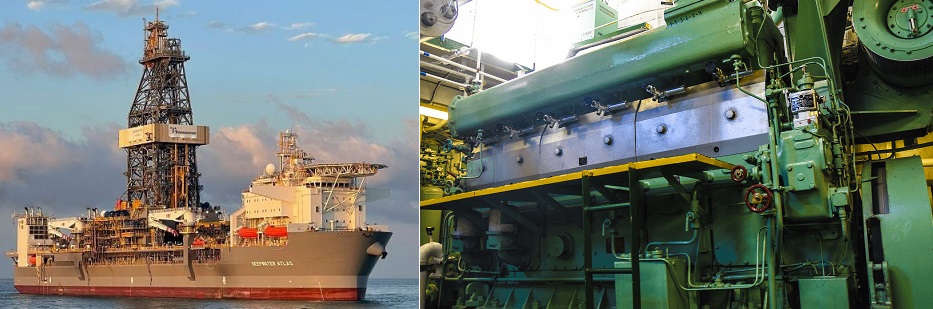
In 2013, a drilling vessel operating on the U.S. Outer Continental Shelf (OCS) was equipped with a DP3-class dynamic positioning system and an 11 kV closed-ring bus distribution system. The vessel utilized multiple main diesel generators (MDGs), supported by a complex power management and redundancy architecture designed for deep-water drilling operations, where power system stability and fault tolerance are mission-critical.
Incident Description
Prior to the accident, the vessel’s No. 6 main diesel generator repeatedly issued intermittent neutral overvoltage alarms. The alarms appeared when the generator was isolated from the bus but disappeared once reconnected. As the root cause was not identified, the crew continued operating the system in closed-bus mode.
The fault later escalated into a high-severity generator neutral ground fault. Fault current propagated rapidly throughout the 11 kV distribution system, damaging key components of the automated power management system and triggering cascading trips of transformer circuit breakers. This resulted in a total vessel blackout, causing the drilling vessel to drift off position.
Fortunately, the crew successfully executed an emergency well disconnection procedure, preventing casualties and environmental pollution.
Root Cause Analysis
The root cause was traced to a manufacturing defect in the vacuum circuit breaker associated with Generator No. 6. Microscopic pinholes in a weld seam allowed gradual loss of vacuum. When the breaker opened, the arc-quenching medium failed to suppress the arc effectively, generating severe voltage spikes that impacted the generator neutral point and triggered the high-severity ground fault.
The closed-ring bus configuration enabled rapid fault propagation. Combined with insufficient attention to intermittent neutral faults and the failure to isolate the affected generator in time, multiple contributing factors culminated in the full-vessel blackout.
6. Transformer Failure at Jakarta Combined-Cycle Power Plant, Indonesia
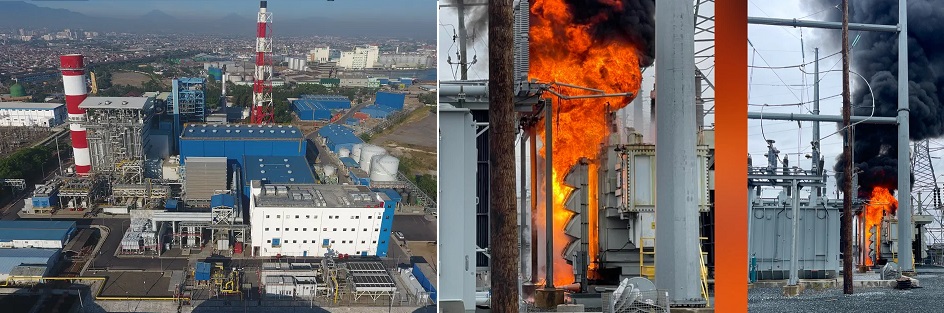
This incident occurred at a combined-cycle power plant near Muara Karang, Jakarta, during 2025, and represents a典型 catastrophic failure caused by a neutral insulation weakness in a graded-insulation transformer.
Incident Description
A 200 MVA main transformer was in operation when an external transmission line was struck by lightning, causing a single-line-to-ground fault. Under normal conditions, protection systems should have cleared the line fault promptly. However, the transformer’s neutral bushing had been exposed to high-humidity conditions for an extended period, resulting in seal failure and moisture ingress that degraded the internal paper insulation.
Under the impact of fault-induced overvoltage, the neutral insulation failed instantaneously.
Key Failure Mechanism
Investigations revealed intense arcing between the transformer neutral point and the tank. This internal arc generated extreme temperatures, rapidly vaporizing insulating oil within the tank. The resulting mechanical pressure violently ruptured the transformer cover and tore open the tank. The expelled high-temperature oil mist ignited upon contact with air, engulfing the transformer in fire and leading to its total destruction within a very short time.
Consequences and Lessons Learned
The accident forced the shutdown of a 200 MW-class gas turbine unit and caused prolonged outages due to the long manufacturing lead time required to replace a customized large-capacity transformer. The incident underscores the critical necessity of online monitoring of transformer neutral insulation condition, particularly in tropical, high-humidity environments.
CATEGORIES
- Neutral Grounding Resistor for Transformer
- Generator Neutral Grounding Resistor
- Low Voltage Neutral Grounding Resistor
- Neutral Grounding Arc Suppression Coils (Peterson Coil)
- Neutral Point Gap Grounding Protection Device
- Nitrogen Injection Fire Protection System for Transformer (NIFPS)
- Transformer Air-Cooled Control Equipment
- Nonlinear Neutral Grounding Equipment
LATEST NEWS
- Why Does the Neutral Point of a Large Generator Need to be Reliably Grounded?
- Transformer Neutral Grounding Methods and Applications for High-, Medium-, and Low-Voltage Systems
- How to Accurately Calculate the Neutral Grounding Resistance Value of a Transformer
- Global Top 8 Neutral Grounding Resistor (NGR)Manufacturers
- How to Accurately Select the Insulation Level of a Neutral Grounding Resistor?
CONTACT US
WhatsApp:
Tel: +86-312-5959618
Email: info@orionresistors.com
Add: No. 79, Fuchang Road, Zhongguancun Entrepreneurship Base, Baoding City,China