What is a Neutral Grounding Resistor, and where it is used?
Writer: admin Time:2026-04-29 09:35:52 Browse:200℃
1. Definition and System Role of Neutral Grounding Resistor
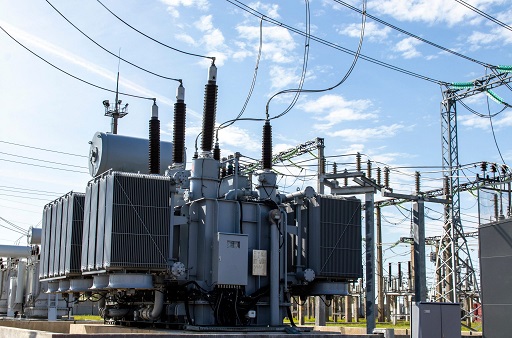
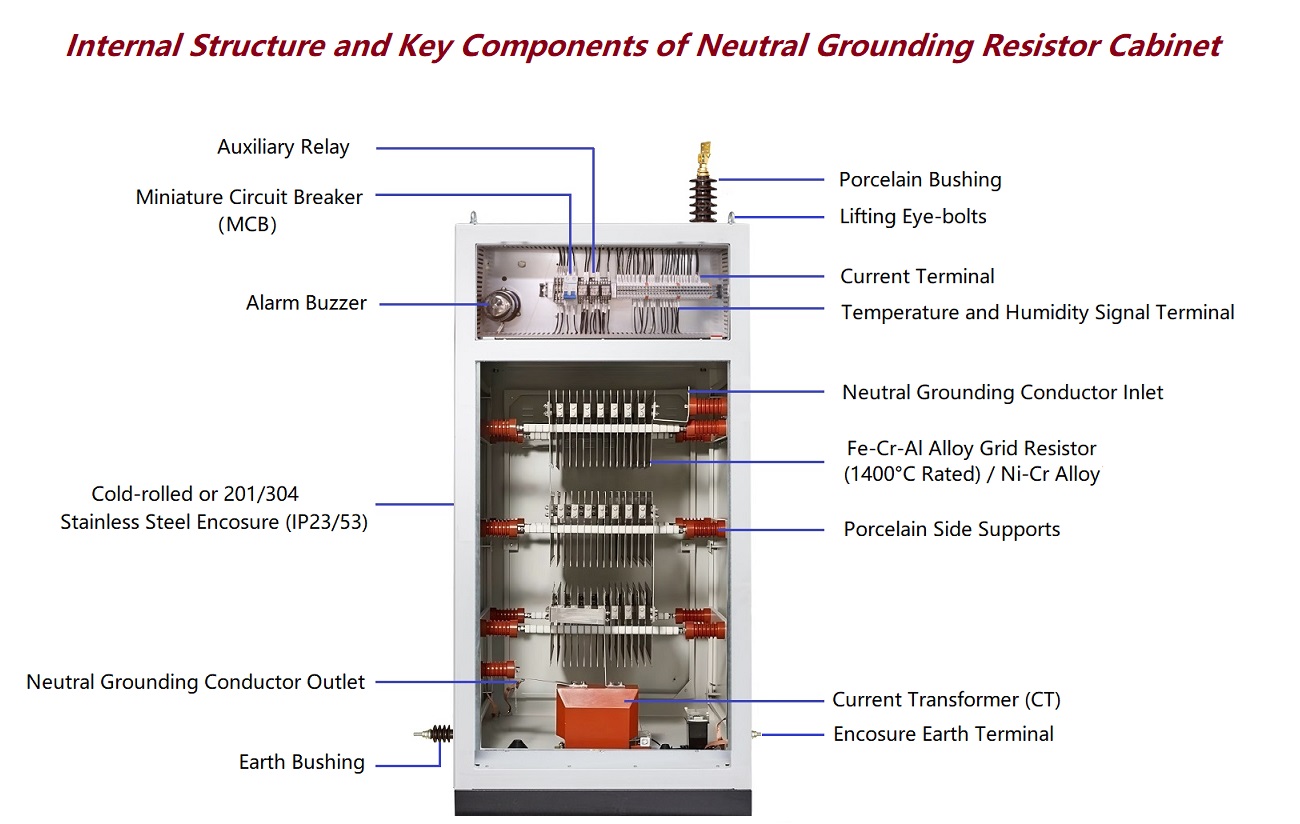
A Neutral Grounding Resistor (NGR) is installed between the neutral point of a transformer or generator and earth, providing a controlled path for ground fault current.
It is widely used in medium- and high-voltage power systems, including utility substations, industrial power distribution networks, renewable energy plants, and critical infrastructure.
The NGR is a fundamental component for ensuring safe and stable operation of electrical power systems by controlling ground fault behavior and protecting system assets.
2. Grounding Methods and System Classification
From a system design perspective, neutral grounding using resistors is generally classified into two main types: Low Resistance Grounding (LRG) and High Resistance Grounding (HRG).
LRG systems are designed to allow relatively higher ground fault currents, enabling fast detection and selective tripping of protection devices. HRG systems, on the other hand, limit the fault current to a very low level, allowing the system to continue operating under a single line-to-ground fault condition without immediate shutdown.
The selection between LRG and HRG depends on system voltage level, operational philosophy, continuity requirements, and protection coordination strategy.
3. Working Principle Under Normal and Fault Conditions
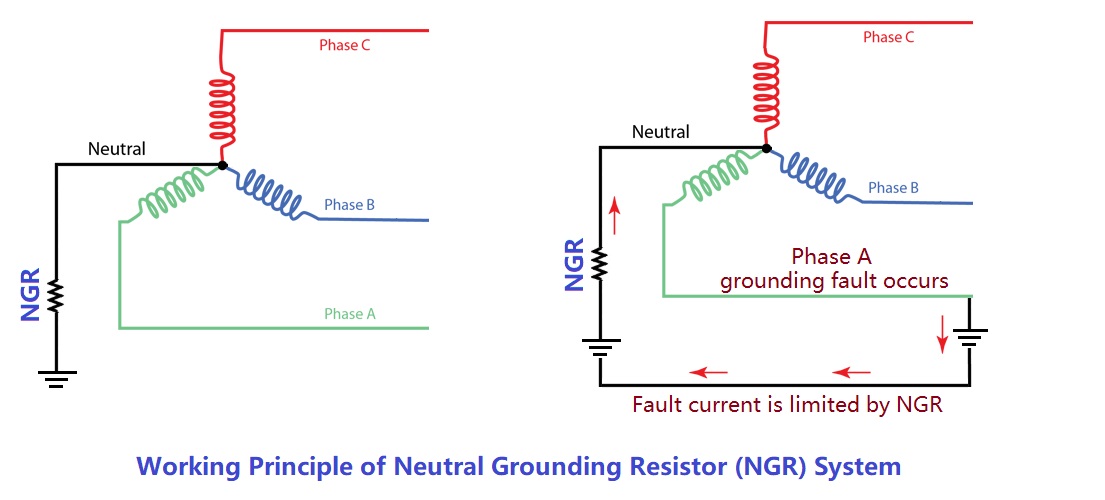
Under normal operating conditions, the three-phase system remains balanced and the neutral point potential is close to zero. As a result, no significant current flows through the neutral grounding resistor.
When a single line-to-ground fault occurs, the system becomes unbalanced and the neutral point shifts. This creates a closed circuit for fault current through the transformer or generator neutral, the grounding resistor, and earth.
The NGR limits this fault current to a predefined design value, preventing uncontrolled current escalation while ensuring sufficient magnitude for reliable detection by protection relays. At the same time, it helps reduce transient overvoltages, especially in systems with high cable capacitance, improving insulation coordination and system stability.
4. Engineering Function and Electrical System Protection Value
The engineering value of the NGR is reflected in its ability to control fault current and coordinate system protection.
By limiting ground fault current within a calculated range, typically determined by system phase voltage and required fault current level, the NGR significantly reduces thermal and mechanical stress on transformers, switchgear, and cables.
In HRG systems, special attention is given to system capacitive charging current. The grounding current is typically designed to be slightly higher than the total system charging current to prevent intermittent arcing and overvoltage conditions.
This coordinated design ensures both equipment protection and system operational stability.
5. Safety Enhancement and Overvoltage Mitigation
Beyond equipment protection, the NGR plays a critical role in improving personnel safety and system voltage stability.
By limiting fault current, it reduces touch and step voltage during ground faults, lowering the risk of electric shock hazards. It also suppresses transient overvoltages caused by arc re-ignition and insulation stress.
When integrated with modern protection relays, the NGR supports accurate fault detection and faster isolation of faulty circuits, improving overall system reliability.
6. Practical Application in Transformer and Generator Systems
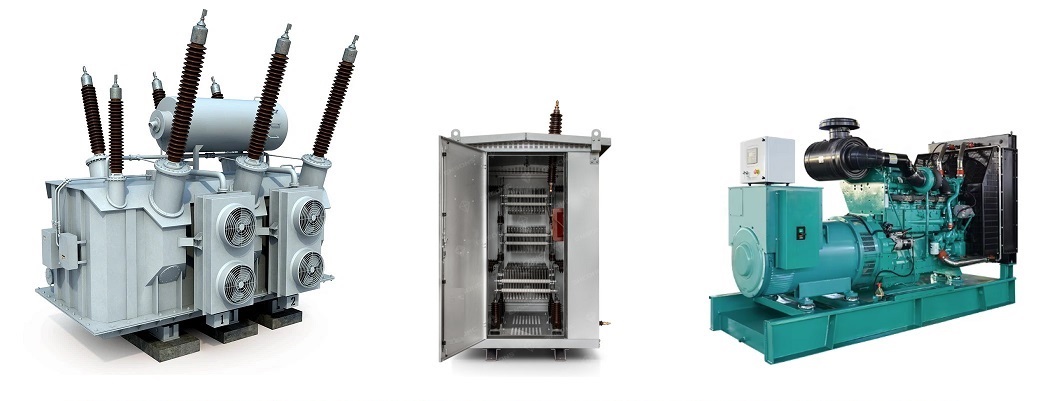
In transformer-based distribution systems, uncontrolled ground faults can result in extremely high short-circuit currents, potentially causing winding deformation or insulation failure. With an appropriately designed NGR, fault current is maintained within equipment thermal limits, allowing protection systems to isolate the fault without cascading system failure.
In generator applications, particularly in large thermal and renewable power plants, the NGR is essential for protecting stator windings. It limits ground fault current and reduces overvoltage stress during fault conditions, preventing insulation breakdown and enabling safe shutdown and maintenance.
7. System Applications and Industry Coverage
With the continuous expansion of modern power systems, especially the increasing use of underground cable networks and distributed generation, the importance of controlled grounding has significantly increased.
NGR systems are widely applied in:
Utility transmission and distribution substations
Industrial manufacturing plants
Petrochemical and process industries
Data centers and IT infrastructure
Renewable energy plants such as wind and solar farms
Transportation systems including rail and airport power networks
These applications require high reliability, continuous operation capability, and enhanced fault tolerance.
8. Conclusion and System Importance
The Neutral Grounding Resistor is not merely a passive electrical component, but a critical part of modern grounding strategy in medium- and high-voltage systems.
By combining controlled fault current limitation, transient overvoltage suppression, and coordination with protection systems, it provides a robust foundation for safe, stable, and efficient power system operation.
CATEGORIES
- Neutral Grounding Resistor for Transformer
- Generator Neutral Grounding Resistor
- Low Voltage Neutral Grounding Resistor
- Neutral Grounding Arc Suppression Coils (Peterson Coil)
- Neutral Point Gap Grounding Protection Device
- Nitrogen Injection Fire Protection System for Transformer (NIFPS)
- Transformer Air-Cooled Control Equipment
- Nonlinear Neutral Grounding Equipment
LATEST NEWS
- Why Does the Neutral Point of a Large Generator Need to be Reliably Grounded?
- Transformer Neutral Grounding Methods and Applications for High-, Medium-, and Low-Voltage Systems
- How to Accurately Calculate the Neutral Grounding Resistance Value of a Transformer
- Global Top 8 Neutral Grounding Resistor (NGR)Manufacturers
- How to Accurately Select the Insulation Level of a Neutral Grounding Resistor?
CONTACT US
WhatsApp:
Tel: +86-312-5959618
Email: info@orionresistors.com
Add: No. 79, Fuchang Road, Zhongguancun Entrepreneurship Base, Baoding City,China